Why Food Coloring Stains Laminate Countertops
Food coloring stains on laminate countertops are a common issue in kitchens, but understanding why they occur can help you address and prevent them effectively. Laminate countertops, while durable and cost-effective, are made of layers of pressed wood or particleboard covered with a decorative layer sealed under a resin coating. The surface may appear solid and smooth, but it is slightly porous, especially if the protective coating has worn down over time.
How Food Coloring Causes Stains
- Liquid Form: As a liquid, food coloring spreads quickly and penetrates small cracks or imperfections in older laminate.
- Vivid Pigments: The bright dyes used in food coloring contain strong chemical compounds that adhere tightly to surfaces.
- Extended Contact: If left untreated, stains can set as the liquid dries or bonds with the countertop material.
Role of Countertop Condition
| Countertop Condition | Stain Susceptibility |
| Brand New & Well-Sealed | Minimal staining risk; protective coating intact. |
| Moderately Worn | Increased risk as sealant starts wearing down. |
| Damaged/Old | High potential for stains due to exposed porous surface. |
Regular maintenance ensures your countertop retains its ability to resist stains over time.
External Factors That Aggravate Stains
- Heat Exposure: Hot pans placed directly on the countertop can weaken resin layers, creating new opportunities for staining.
- Use of Abrasive Cleaners: Harsh scrubbing tools or cleaners may strip away the protective surface layer over time.
- Delayed Cleaning: Allowing spills to sit longer increases their ability to seep into the material.
Key Takeaways
Understanding why food coloring stains occur is crucial for tackling existing messes and preventing future ones. Knowing that these pigments interact with microscopic pores in your countertops highlights why immediate action after spills—and proper care—are essential for keeping your surfaces looking clean and vibrant without unnecessary wear and tear.
What to Do Immediately After a Spill
Step 1: Blot, Don’t Rub
- Use a clean, dry paper towel or cloth to gently blot the spill. Avoid rubbing as this can spread the dye and push it deeper into the surface.
- Work from the outer edges of the spill toward the center to prevent it from spreading further.
Step 2: Rinse with Water
- Dampen a soft sponge or cloth with warm water and gently dab the area.
- The goal is to dilute as much of the food coloring as possible before it has time to bond with the countertop.
Step 3: Apply Mild Dish Soap
- Mix a few drops of gentle dish soap with warm water.
- Using another clean sponge or cloth, apply this soapy solution directly onto the stain. Work in circular motions without applying too much pressure.
Step 4: Wipe Away Residue
- Once you’ve lifted as much of the food coloring as possible, wipe away any residue using a damp microfiber cloth.
- Make sure there’s no soap left on the surface since dried soap can sometimes attract dirt.
Quick Action Checklist
| Action | Why It’s Important |
| Blot, don’t rub | Prevents spreading and deepening of stains |
| Rinse with water | Dilutes concentrated pigments |
| Use mild dish soap | Safely breaks down color particles without damage |
| Avoid abrasive tools | Protects laminate from scratches |
What Not to Do in an Emergency Spill Situation
Taking fast action is critical, but certain mistakes can unintentionally worsen stains or damage your laminate countertop. Be mindful of these common errors: – Do not use harsh cleaners immediately: Products like bleach or ammonia may seem effective but can strip protective coatings on laminate surfaces. – Avoid abrasive materials: Tools like steel wool or scrubbing pads can cause scratches that make future stains harder to remove. – Don’t let spills sit unattended: Even leaving food coloring for five minutes can make removal more challenging.
By addressing spills immediately and using safe techniques, you’ll maintain your countertops’ appearance while avoiding unnecessary damage.
Safe Cleaning Solutions for Laminate Surfaces
1. Mild Dish Soap and Warm Water
This is the most basic and gentle solution for cleaning laminate surfaces.
- Mix a few drops of mild dish soap with warm water in a small bowl.
- Dip a soft microfiber cloth or sponge into the soapy water and gently wipe the surface.
- For stains, apply light pressure in circular motions to lift the pigment.
- Rinse with clean water and dry with a soft towel to avoid streaks.
This method works best for fresh food coloring spills or light stains.
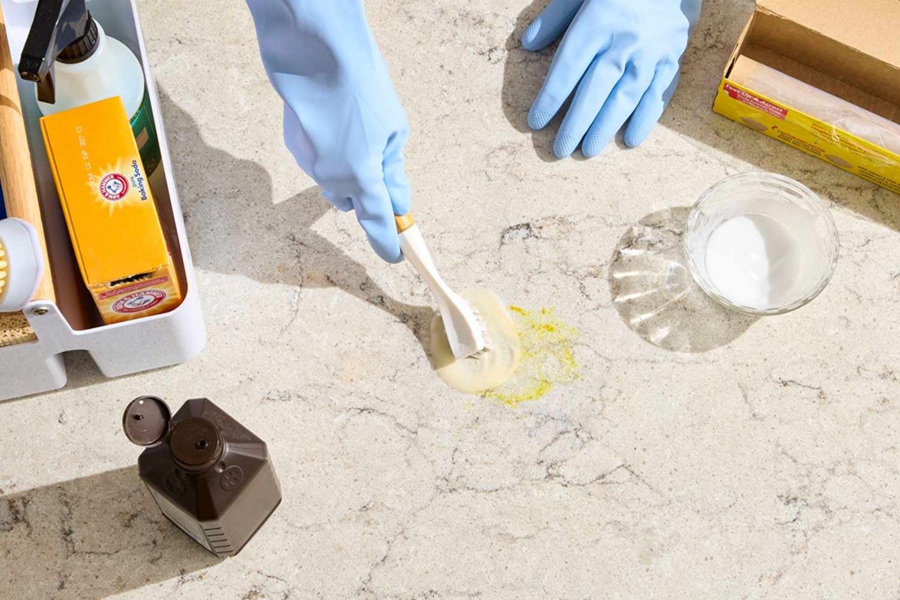
2. Baking Soda Paste
Baking soda is mildly abrasive but safe for most laminate countertops when used correctly.
- Mix two parts baking soda with one part water to create a paste.
- Spread the paste over the stained area using your fingers or a soft cloth.
- Let it sit for 5–10 minutes to loosen the stain.
- Use a damp microfiber cloth to gently scrub in circular motions, avoiding excessive pressure that might scratch the surface.
- Wipe away any residue with clean water and dry thoroughly.
3. White Vinegar Solution
White vinegar is an excellent natural cleaner that helps break down pigments while being gentle on laminate.
- Mix equal parts of white vinegar and warm water in a spray bottle.
- Spray the mixture directly onto the stain and let it sit for 5 minutes.
- Use a non-abrasive sponge or cloth to dab (not rub) at the stain until it begins lifting.
- Rinse with water and pat dry.
For older stains, combine white vinegar with baking soda for added effectiveness.
4. Hydrogen Peroxide (4%)
Hydrogen peroxide can be used as an effective spot treatment for stubborn stains, but use it sparingly as overuse can discolor some laminate finishes.
- Pour a small amount of 3% hydrogen peroxide onto a cotton ball or cloth.
- Dab directly on the stained area and allow it to sit for 5–10 minutes.
- Gently wipe away using circular motions, then rinse thoroughly with water.
Always test hydrogen peroxide on an inconspicuous area before applying it widely.
5. Commercial Laminate-Safe Cleaners
If DIY methods aren’t doing enough, there are commercial cleaners designed specifically for laminate surfaces. Look for products labeled as non-abrasive or formulated for gentle cleaning on countertops. Follow product instructions carefully when applying these solutions.
| Cleaning Solution | Best For | Application Notes |
| Dish Soap + Warm Water | Fresh spills & light stains | Gentle option; use as first-line cleaning method |
| Baking Soda Paste | Minor dried stains | Apply lightly; avoid scratching while scrubbing |
| White Vinegar | Medium-intensity fresh/dry stains | Effective natural option; avoid leaving too long |
| Hydrogen Peroxide | Tough or old stains | Test first; limit prolonged exposure |
| Commercial Cleaners | Persistent high-difficulty stains | Ensure product compatibility with laminate surfaces |
Tips When Using Cleaning Solutions
- Always test new solutions on an inconspicuous area before widespread application.
- Avoid scrubbing aggressively; let chemicals do most of the work to prevent scratches.
- Never mix vinegar and bleach – this creates harmful fumes that are unsafe indoors.
- Do not let cleaning agents sit too long on unsealed edges of laminate, as this may lead to swelling over time.
These safe cleaning methods will help preserve both the appearance and integrity of your laminate countertops while efficiently removing food coloring stains from their surface.
Step-by-Step Methods for Removing Tough Stains
Removing tough food coloring stains from laminate countertops requires patience and the right approach. Laminate surfaces can be tricky to clean because they are sensitive to abrasive cleaners and excessive moisture. However, by following these step-by-step methods, you can effectively lift stubborn stains without damaging the surface.
Step 1: Gather Your Supplies
- Mild dish soap
- Warm water
- Soft microfiber cloth or sponge
- Baking soda
- White vinegar
- Hydrogen peroxide (3% solution)
- Plastic scraper (optional)
- Non-abrasive cleaner designed for laminate surfaces
Having these items ready will ensure a smoother cleaning process.
Step 2: Test in a Hidden Area First
Always test any cleaning solution on an inconspicuous area of your countertop before applying it to the stain. This step ensures that the cleaner won’t discolor or damage the laminate surface.
Step 3: Start with Gentle Cleaning
- Mix dish soap and warm water: Combine a few drops of dish soap with warm water in a small bowl.
- Apply to the stain: Dip a microfiber cloth or sponge into the soapy water and gently rub the stained area in circular motions.
- Rinse thoroughly: Wipe away any soap residue with a clean, damp cloth.
- Dry immediately: Use another dry microfiber cloth to prevent water from seeping into seams or edges.
If this method doesn’t fully remove the stain, move on to more targeted techniques below.
Step 4: Use Baking Soda Paste for Stubborn Stains
- Create paste: Mix baking soda with a small amount of water until it forms a thick paste.
- Apply directly to the stain: Spread the paste over the stained area using your fingers or a soft cloth.
- Let it sit: Allow the paste to sit on the stain for 5–10 minutes but avoid letting it dry completely.
- Rub gently: Using circular motions, rub the paste into the stain with your cloth or sponge.
- Rinse thoroughly: Remove all traces of baking soda with clean water and dry immediately.
Step 5: Try Vinegar Solutions for Persistent Stains
- Dilute vinegar and water: Mix equal parts white vinegar and warm water in a spray bottle.
- Spray generously onto stain: Apply enough solution to saturate only the affected area (avoid oversaturating as too much moisture can damage laminate).
- Let it sit briefly: Allow it to sit for about 5 minutes so that it loosens pigments from within pores of laminated finishings below layers’ glossed topcoat better; note however not intended regular practice else sealing degrade overtime unintended buildup deposits occur herein layers recurrently etc…
How to Protect Laminate Countertops from Future Stains
Preventing food coloring and other substances from staining your laminate countertops is all about proactive care and proper habits. By taking simple steps to protect the surface, you can maintain the look and longevity of your countertops while reducing the need for deep cleaning or restoration treatments. Below are methods and practical tips to safeguard your laminate surfaces from future stains.
Use Protective Barriers
One of the easiest ways to prevent stains is by creating a barrier between the countertop surface and potential staining agents. Consider the following options:
– Cutting Boards: Always use a cutting board when working with food coloring or other staining ingredients like berries or turmeric.
– Silicone Mats: For messy projects like baking or crafting, place a silicone mat on your countertop for easy cleanup.
– Coasters and Placemats: Use coasters under drinks and placemats under serving dishes to reduce direct contact with liquids that may cause staining.
Apply a Sealant
Though laminate countertops don’t require sealing in the same way as natural stone, applying a protective sealant can add an extra layer of defense against future stains. Look for products specifically formulated for laminate surfaces.
Steps to Apply Laminate Countertop Sealant:
1. Clean the countertop thoroughly with mild soap and water, ensuring no residue remains.
2. Dry the surface completely using a soft cloth or paper towel.
3. Evenly apply the sealant using a clean sponge or microfiber cloth, following package instructions carefully.
4. Allow it to cure fully before using the countertop again (curing times may vary).
Repeat this process every 6–12 months based on manufacturer recommendations.
Minimize Exposure Time for Liquids
- Wipe up spills immediately using a damp cloth or paper towel.
- For sticky substances like syrups or sauces mixed with food coloring, rinse with warm water promptly after cleaning up.
- Be especially careful during high-risk activities such as icing cakes, tie-dyeing fabrics, or working with craft supplies containing dyes.
Implement Routine Maintenance Practices
- Daily Cleaning: Wipe down countertops daily using mild dish soap diluted in warm water.
- Avoid Abrasive Tools: Prevent scratches by cleaning only with soft sponges, microfiber cloths, or non-abrasive scrub pads.
- Deep Cleaning Weekly: Use specialized laminate-safe cleaners periodically to lift hidden grime that could contribute to discoloration later.
Educate Household Members
- Teach children how to handle food coloring safely in a controlled area (e.g., over protective barriers).
- Encourage family members not to allow spills—especially colored liquids—to sit unattended on laminate surfaces.
By implementing these preventative techniques consistently, you can avoid unnecessary stress caused by stubborn stains while preserving both functionality and aesthetics of your laminate countertops over time.
How to Protect Laminate Countertops from Future Stains
Protecting laminate countertops from future stains, including food coloring, is crucial for maintaining their appearance and extending their lifespan. By implementing a few preventative measures and using appropriate products, you can safeguard these surfaces from potential damage. Below are practical strategies and tips to keep your countertops in pristine condition.
Use Protective Barriers
One of the easiest ways to prevent stains is by creating a physical barrier between the countertop surface and potential staining agents.
- Trays and Cutting Boards: Always use trays or cutting boards when dealing with food items that may contain dyes or other staining ingredients (e.g., berries, sauces, or food coloring).
- Silicone Mats: Silicone mats are heat-resistant, waterproof, and easy to clean. They work well as protective layers during messy food preparation tasks.
- Coasters: Use coasters under drinks to avoid liquid rings that could discolor laminate surfaces over time.
Seal the Laminate Surface
Although laminate countertops are not porous like stone surfaces, they can still benefit from an added layer of protection.
- Laminate-Specific Sealants: These products help create an invisible shield against moisture and stains. Look for sealants designed specifically for laminate to avoid damage.
- Wax-Based Polishes: Some polishes not only add shine but also provide stain resistance. Apply sparingly according to manufacturer instructions.
Quick Clean-Up Practices
Even with precautions in place, spills can still happen. Acting quickly is essential in preventing staining agents like food coloring from setting into the surface.
- Blot spills immediately with a clean cloth—avoid wiping as it may spread the liquid further.
- Rinse the area with lukewarm water to dilute any residue.
- Dry thoroughly using a microfiber cloth to prevent water spots or streaks.
Avoid Harsh Cleaners
- Opt for Mild Detergents: Gentle dish soap diluted in water is sufficient for most daily messes.
- Avoid Abrasive Materials: Stay away from scouring pads or powders that could scratch the surface.
- Test Products First: Always test new cleaners on an inconspicuous area before using them extensively.
| Recommended Cleaners | Avoid These Cleaners |
| Mild dish soap + warm water | Bleach |
| Vinegar-water mixture (diluted) | Ammonia-based cleaners |
| Non-abrasive surface sprays | Abrasive scouring powders |
Prevent Contact with Staining Agents
- Store food coloring bottles safely away from counters where spills are likely.
- Use covered containers for highly pigmented liquids like juices or marinades.
- Encourage family members or guests to clean up spills immediately during meal preparation or crafts involving dyes.
By adopting these practices consistently, you can maintain stain-free laminate countertops while reducing stress related to recurring cleaning challenges. A proactive approach ensures your counters remain functional and visually appealing for years ahead without requiring frequent interventions or professional repairs.
When Professional Restoration May Be Necessary
While many food coloring stains on laminate countertops can be resolved with home remedies and careful cleaning, there are instances where professional restoration may be the best or only option. Whether due to the severity of the stain, the material’s condition, or unsuccessful prior cleaning attempts, professional services can provide advanced solutions. Below, we outline situations that may require expert intervention and what you can expect from the process.
When to Consider Professional Help
- Deep-Set Stains: If food coloring has penetrated the laminate’s protective layer and seeped into deeper layers of material.
- Old Stains: Staining that has been left untreated for an extended period may harden and bond more strongly with the surface.
- Damage After DIY Attempts: Using harsh chemicals or abrasive tools might damage your countertop further instead of removing stains.
- Discoloration or Fading: Aggressive cleaning methods can sometimes lead to uneven color fading in the laminate surface.
- Widespread Damage: If stains are spread across a large area or accompanied by physical damages like scratches or peeling.
What Professionals Can Do
- Professionals often use powerful yet safe solvents that lift stubborn stains without harming laminate surfaces.
- They may apply industrial-grade cleaners specifically designed for laminated materials.
- For scuffs or dull spots caused by scrubbing, professionals can buff out imperfections using high-quality polishing tools.
- This service leaves countertops looking smooth and refreshed.
- In cases where staining has penetrated past the outer layer of laminate, experts might apply a new sealant coat to restore protection and shine while masking discoloration.
- Heat treatments or ultrasonic cleaning methods may be employed for severe cases where traditional approaches fall short.
Cost vs. Benefit Analysis
| Factor | Professional Restoration | Full Countertop Replacement |
| Cost | Moderate | High |
| Time Required | 1–2 hours typically | Multiple days |
| Effectiveness | Excellent (targeted fix) | Complete reset |
| Environmental Impact | Low | High (waste generation) |
If you’re dealing with a minor surface stain, it’s likely more cost-effective to try safe home-cleaning methods before resorting to professional help. However, if repeated attempts have failed or if preserving your existing countertop is your goal, hiring professionals is often worth considering.
Finding a Reliable Professional
- Look for specialists in laminate materials rather than general cleaners.
- Read online reviews and ask for references before committing.
- Confirm their methods align with best practices by asking about specific products they use and whether they offer guarantees.
By recognizing when professional intervention is needed and seeking reputable services, you can extend your countertop’s life while maintaining its appearance effectively.