Why Water Stains Appear on Wood Surfaces
Water stains on wood surfaces occur due to the interaction between moisture and the wood’s finish or fibers. These unsightly marks are typically categorized into two types: white water stains and dark water stains, each caused by different processes. Understanding these distinctions can help you select the right approach for removing them.
White Water Stains: What Causes Them?
- Condensation from cold beverages left without coasters
- Water spills that weren’t wiped promptly
- Excessive humidity in certain environments
Since white stains are confined to the surface-level finish, they are generally easier to treat.
Dark Water Stains: A Different Problem
- The wood’s finish is worn, scratched, or absent
- Standing water remains on an unsealed wooden surface for an extended period
Dark stains signify deeper absorption, making them more challenging to remove than white water marks. For these cases, more intensive methods—beyond mayonnaise—may be necessary.
How Does Wood’s Finish Impact Water Staining?
| Wood Finish | Stain Susceptibility |
| Varnish | Resistant to deep penetration; vulnerable to white marks |
| Lacquer | Similar protection as varnish but thinner coat |
| Polyurethane | Highly durable but susceptible to surface clouding |
| Unfinished Wood | Highly absorbent; prone to deeper dark stains |
Knowing your wood’s finish can help you assess whether mayonnaise is likely to work as a stain removal method.
Additional Factors Contributing to Water Stains
- Temperature Changes – Rapid changes in temperature create condensation that settles on wooden surfaces.
- Neglected Maintenance – Over time, neglecting proper care (e.g., polishing) can weaken a protective coating.
- Prolonged Exposure to Liquids – Even small amounts of liquid left unattended can result in long-term damage.
By addressing these factors and understanding why water stains form, you’ll be better equipped not only to remove existing marks but also prevent future ones effectively.
How Mayonnaise Helps Remove White Water Marks
Water stains, particularly the white or cloudy marks that often appear on wood surfaces, occur when moisture gets trapped beneath the finish or wax layer of furniture. These stains disrupt the sleek, polished appearance of your wood. While many household remedies exist, mayonnaise stands out as both an unconventional and surprisingly effective solution for tackling these stubborn marks. But how exactly does mayonnaise work?
Breaking Down Mayonnaise’s Effectiveness
- Oil Content: The oils in mayonnaise are key to rehydrating the surface of the wood and restoring luster. When applied directly to a water stain, oils seep into the affected area, displacing any trapped moisture and blending with the existing finish.
- Acidity from Vinegar or Lemon Juice: Some varieties of mayonnaise include acidic components like vinegar or lemon juice. These mild acids gently break down mineral deposits left behind by evaporated water without damaging the wood.
- Emulsifiers: The creamy consistency ensures that it stays in place during application and doesn’t run off, allowing it to deeply penetrate over time.
How It Works on White Stains Specifically
White water stains are caused by moisture being absorbed into only the top layers of a wood finish rather than penetrating deep into the wood itself (which would result in darker stains). This makes them easier to treat using methods like mayonnaise, as no heavy-duty refinishing is required. The oils in mayonnaise effectively restore balance to these top layers without stripping away protective coatings.
Comparing Mayonnaise with Other Remedies
| Remedy | Mechanism of Action | Risk to Wood Finish | Ease of Use |
| Mayonnaise | Oils rehydrate and push out moisture | Low | Very easy |
| Baking Soda Paste | May absorb light moisture but abrasive | Medium (can scratch) | Moderate effort |
| Heat (e.g., hairdryer) | Evaporates trapped water | Low if used properly | Requires patience |
| Toothpaste (non-gel) | Abrasive agents lift surface residue | Medium (may dull polish) | Messy |
While other methods may work for minor water damage, they often carry risks such as scratching or dulling your furniture’s finish. Mayonnaise’s gentler properties make it ideal for maintaining both appearance and integrity.
Additional Benefits
- Safe for Delicate Woods: Unlike harsh commercial chemicals or abrasive scrubs, mayonnaise is gentle enough to use on delicate finishes.
- Cost-Effective & Accessible: Most people already have a jar of mayo at home, making it a convenient first line of defense before trying more complicated methods.
- No Harsh Odors: Compared to some chemical agents used for stain removal, mayo has no overpowering synthetic smell.
Common Misconceptions
Some worry that using food products like mayonnaise might leave behind residue or attract pests over time. However: – Proper wiping and polishing post-treatment ensure no oily residue remains. – A single application won’t make your furniture prone to ants if cleaned thoroughly afterward.
In summary, mayonnaise’s natural combination of oils and mild acids makes it an excellent tool against unsightly white water stains on wooden surfaces while preserving their beauty effortlessly.
Types of Wood Stains This Method Works Best On
When it comes to removing water stains with mayonnaise, understanding the type of stain and the wood surface you’re working with is critical. Not all water stains are created equal, and the effectiveness of this method can vary depending on whether you’re dealing with white or dark stains, as well as the type of wood finish. Below, we’ll explore which types of wood surfaces and stains respond best to this unique technique.
White Water Marks vs. Dark Water Stains
- White Water Marks: These are typically caused by moisture trapped in the finish layer of the wood. They appear as hazy or cloudy spots on the surface and are often left behind by cold glasses, hot plates, or condensation.
- Mayonnaise works exceptionally well on white water marks because its oil content penetrates the finish and helps to displace moisture while restoring luster.
- Dark Water Stains: These occur when water seeps past the finish into the raw wood beneath. They often appear as black or dark discoloration.
- Mayonnaise is less effective for dark stains because it primarily addresses moisture trapped in surface layers. For these deep-set stains, alternative methods like sanding and staining may be required.
Ideal Wood Types for This Method
Mayonnaise is a gentle solution that works best on certain kinds of wood finishes but might not be suitable for others.
- Finished Hardwood Surfaces: If your wooden furniture has a sealed, lacquered, or varnished topcoat, mayonnaise can effectively remove white water marks without damaging the protective layer.
- Semi-Sealed Woods: Woods with light oil finishes or wax coatings may also benefit from this method since it doesn’t involve harsh chemicals that could strip away natural oils in these finishes.
- Softwoods (like Pine): Softwoods with a sealed surface respond well to mayonnaise treatments because they are more prone to absorbing moisture into their finishes rather than into their fibers.
Surfaces Where Caution is Advised
- Unfinished Wood: Since unfinished wood lacks a protective barrier, applying mayonnaise directly could result in oily residue being absorbed into the grain.
- Antique Furniture: For antiques with sensitive finishes or delicate veneers, test an inconspicuous area before proceeding to avoid unintended damage.
| Wood Type | Suitability for Mayonnaise Treatment | Notes |
| Finished hardwood | Excellent | Works well on lacquered/varnished pieces |
| Semi-sealed woods | Good | Test first if unsure about finish |
| Softwoods (pine) | Good | Great for sealed softwood surfaces |
| Unfinished wood | Not recommended | May absorb oils unevenly |
| Antique furniture | Use caution | Test in small area first |
Additional Considerations
If you’re unsure about your furniture’s finish or stain type: – Test a small amount of mayonnaise in an inconspicuous spot before treating larger areas. – Consult an expert if dealing with high-value or antique items.
By knowing which types of stains and surfaces respond well to mayonnaise treatments, you can approach this method confidently and achieve clearer results while preserving your furniture’s integrity.
Step-by-Step Guide to Using Mayonnaise on Wood
Using mayonnaise to remove water stains from wood is a surprisingly simple yet effective method. Below is a step-by-step guide that will help you achieve the best results without causing damage to your wood furniture.
Materials You’ll Need:
- Mayonnaise: Regular, full-fat mayonnaise works best due to its oil content.
- Soft cloths: Use lint-free or microfiber cloths for application and polishing.
- Plastic wrap or wax paper (optional): This can help keep the mayonnaise in place for deeper stains.
- A spoon or butter knife: To scoop out and apply the mayonnaise easily.
- Wood polish or furniture oil (optional): For restoring shine after cleaning.
Step 1: Clean the Surface
Before applying anything, clean the affected area of your wooden surface gently.
- Use a dry, soft cloth to wipe away dust and debris from the area.
- If needed, slightly dampen another cloth with water (but avoid soaking it) and wipe down the spot. Allow it to dry completely before proceeding.
Step 2: Apply Mayonnaise
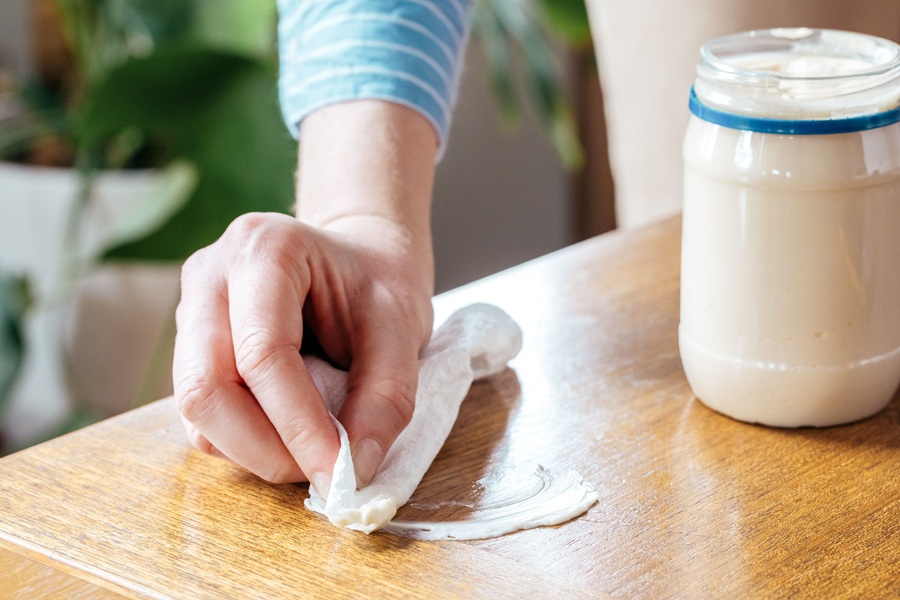
Once the surface is clean and dry, apply a generous layer of mayonnaise over the white water stain.
- Scoop out about 1–2 tablespoons of mayonnaise using a spoon or butter knife.
- Spread it evenly across the affected area with your finger or a soft cloth.
- Ensure that no parts of the stain are left uncovered.
If dealing with larger or deeper stains, consider covering the applied mayonnaise with plastic wrap or wax paper to keep it in place during rest time.
Step 3: Let It Sit
Allowing the mayonnaise some time to work is crucial for removing water stains effectively.
- Leave the mayonnaise on for at least 30 minutes for light stains.
- For more persistent marks, let it sit overnight (6–8 hours) while covered by plastic wrap if necessary.
This resting period allows oils in the mayo to penetrate into the wood’s finish and displace trapped moisture that causes white water marks.
Step 4: Wipe Away Excess Mayonnaise
- Use a fresh microfiber cloth to gently wipe away all traces of mayonnaise from your wood surface.
- Pay attention to any residue remaining around edges; clean carefully without scrubbing too hard.
Step 5: Buff & Restore Shine
- Take another clean microfiber cloth and buff in circular motions over the treated area.
- If desired, apply a small amount of wood polish or furniture oil using another soft cloth for added shine and protection.
This step not only enhances appearance but also helps rehydrate and seal your wooden surface after treatment.
| Step | Action |
| Gather Materials | Mayo, soft cloths, plastic wrap (optional), polish/oil |
| Clean Surface | Remove dust/debris; ensure it’s fully dry |
| Apply Mayonnaise | Cover stain generously; spread evenly |
| Let It Sit | Rest mayo on stain (30 mins–8 hrs based on severity) |
| Wipe & Polish | Remove excess mayo; buff area for smooth finish |
By following these steps carefully, you’ll not only remove unsightly water stains but also maintain your furniture’s integrity and beauty in a safe manner.
How Long to Let Mayonnaise Sit for Best Results
Using mayonnaise to remove water stains from wood is surprisingly effective, but the key to success lies in timing. Allowing the mayonnaise to sit for the correct duration will ensure it has ample time to penetrate and break down the moisture or residue causing the stain. Below is a detailed breakdown of how long you should leave mayonnaise on the affected surface and why this matters.
Why Time Matters
Mayonnaise works because of its high oil content, which penetrates into the wood’s surface and displaces trapped moisture that causes white water rings or cloudy marks. However, leaving it on too briefly may not give the oils enough time to work effectively. On the other hand, letting it sit for too long can create a mess or even lead to an unintended greasy buildup.
Recommended Duration
- Severity of the Stain: Deeper and more pronounced water stains may require longer treatment times.
- Type of Wood Finish: Highly porous finishes may absorb oils faster than glossy ones with protective varnishes.
- Environmental Conditions: Warm or dry environments can speed up the absorption process.
| Stain Severity | Suggested Timeframe |
| Light/Surface-level | 15–20 minutes |
| Moderate Stains | 1–2 hours |
| Deep/Persistent Marks | Overnight (6–8 hours) |
Step-by-Step Timing Tips
- Apply Generously: Spread a liberal amount of mayonnaise over the affected area using a soft cloth or your fingertips.
- For longer durations (e.g., overnight applications), consider covering the area with plastic wrap or parchment paper to prevent dust accumulation.
- This also helps keep pets or children from accidentally disturbing the treated spot.
- If treating moderate stains, check every 30 minutes by gently wiping away a small portion to evaluate progress.
- For overnight treatments, inspect in the morning and reapply if necessary.
When Shorter Durations Work
If you’re dealing with fresh water stains that haven’t penetrated deeply into the wood grain, you might only need 10–15 minutes of application. A quick test wipe after this period will indicate if additional treatment is needed.
Cautionary Notes
- Avoid letting mayonnaise sit beyond 8 hours as prolonged exposure could make cleanup harder and leave behind greasy residue.
- For delicate wood surfaces or antique furniture, start with shorter timings (15–30 minutes) and assess results before extending duration.
Allowing sufficient time for mayonnaise to work ensures optimal results without unnecessary wear on your wooden furniture’s finish. Proper timing not only removes stains but also restores your surface’s natural beauty effectively.
Wiping, Polishing, and Restoring the Finish
Once you’ve applied mayonnaise to a water stain on your wooden surface and allowed it to sit for the appropriate amount of time, the next step is crucial: wiping, polishing, and restoring the finish. This process ensures that the wood not only looks clean but also regains its original luster. Here’s a step-by-step guide to help you complete this stage effectively.
1. Removing Excess Mayonnaise
After letting the mayonnaise sit and work its magic on the water stain: – Use a clean, soft cloth (preferably microfiber) to gently wipe away all traces of mayonnaise. – Avoid using abrasive materials such as sponges or rough towels that could scratch the wood surface. – If any residue remains, dampen another cloth slightly with warm water and carefully clean off leftover oil.
2. Polishing the Surface
Once the stain is gone and any mayonnaise residue has been removed: – Take a dry microfiber or lint-free cloth. – Gently buff the surface in circular motions. This will not only restore shine but also help distribute any remaining natural oils from the mayonnaise that may have seeped into the wood during treatment.
If additional polishing is needed: – Consider using a small amount of wood polish or furniture wax that matches your furniture’s finish. – Apply it sparingly using another clean cloth. – Work it into the grain of the wood using small circular motions for an even polish.
3. Assessing and Restoring Damage to Finish
| Issue | Suggested Action |
| Small scratches or dull spots | Use a touch-up pen or scratch cover product |
| Faded finish after stain removal | Apply a thin coat of matching furniture oil |
| Persistent dullness | Gently sand with fine-grit sandpaper (if needed) |
4. Protecting Your Hard Work
To maintain your results: – Once polished, consider sealing or treating your furniture with appropriate products like furniture oil, beeswax polish, or polyurethane (depending on your furniture type), especially if it’s in an area prone to spills. – Always use coasters under drinks or place protective mats on frequently used surfaces.
By following these steps, you can ensure that your wooden furniture looks as good as new while also maintaining its longevity. Proper care after removing stains will prevent further wear and tear while showcasing its natural beauty.
Tips to Prevent Future Water Stains on Wood Furniture
Preventing water stains on your wood furniture is an important step in maintaining its beauty and longevity. With some thoughtful habits and protective measures, you can keep your furniture looking pristine while avoiding the need for future stain removal. Below are practical tips to help you protect your wooden surfaces effectively.
Use Coasters, Placemats, and Tablecloths
- Coasters: Always place coasters under glasses, mugs, or any beverage containers. Materials like cork, silicone, or absorbent stone are ideal as they prevent condensation from reaching the wood.
- Placemats: For dining tables or surfaces frequently exposed to food and drink spills, use placemats made of fabric or other water-resistant materials.
- Tablecloths: If hosting meals or events where liquids may spill, consider using a full tablecloth made of waterproof fabric to shield the entire surface.
Apply Protective Finishes
Adding a layer of protection to your wood furniture can significantly reduce the risk of water damage. Options include:
– Furniture Wax: Provides a moisture-resistant barrier while enhancing the natural wood grain. Reapply every few months for consistent protection. – Polyurethane Sealant: A durable option that creates a clear coat over wooden surfaces. This is especially useful for high-use pieces like dining tables. – Oil Treatments: Some oils, like tung oil or linseed oil, penetrate deep into the wood and provide long-lasting protection against moisture.
| Finish Type | Benefits | Frequency of Application |
| Furniture Wax | Moisture resistance; enhances shine | Every 3-6 months |
| Polyurethane Sealant | Durable; protects against scratches & stains | Every 1-2 years |
| Oil Treatments | Deep penetration; natural look | Every 6-12 months |
Place Furniture in Optimal Environments
Environmental factors play a significant role in preventing water stains:
– Avoid Direct Sunlight: Prolonged exposure can dry out the wood finish and make it prone to damage from moisture fluctuations. – Control Humidity Levels: Use a humidifier or dehumidifier to maintain stable indoor humidity levels (ideally around 40%-50%). Fluctuations in humidity can cause the wood to expand or contract, leading to surface vulnerabilities. – Keep Away from Heat Sources: Avoid placing furniture near radiators, fireplaces, or vents where heat can dry out and weaken protective finishes.
Develop Good Cleaning Habits
Regular cleaning prevents dirt buildup that could trap moisture: 1. Dust with a soft cloth weekly – microfiber works best as it gently removes particles without scratching. 2. Clean spills immediately using a damp cloth followed by drying with another clean cloth. 3. Use gentle cleaners specifically designed for wood surfaces instead of harsh chemicals that might degrade protective finishes.
Use Surface Protectors
Investing in additional protective tools will go a long way: – Felt pads under objects such as vases or lamps prevent them from trapping condensation under their bases. – Glass tops can be custom-cut for tables to add an invisible layer of protection without sacrificing aesthetics.
By incorporating these preventive measures into your routine care, you’ll reduce the likelihood of water stains appearing on your beloved wooden furniture while preserving its charm over time.